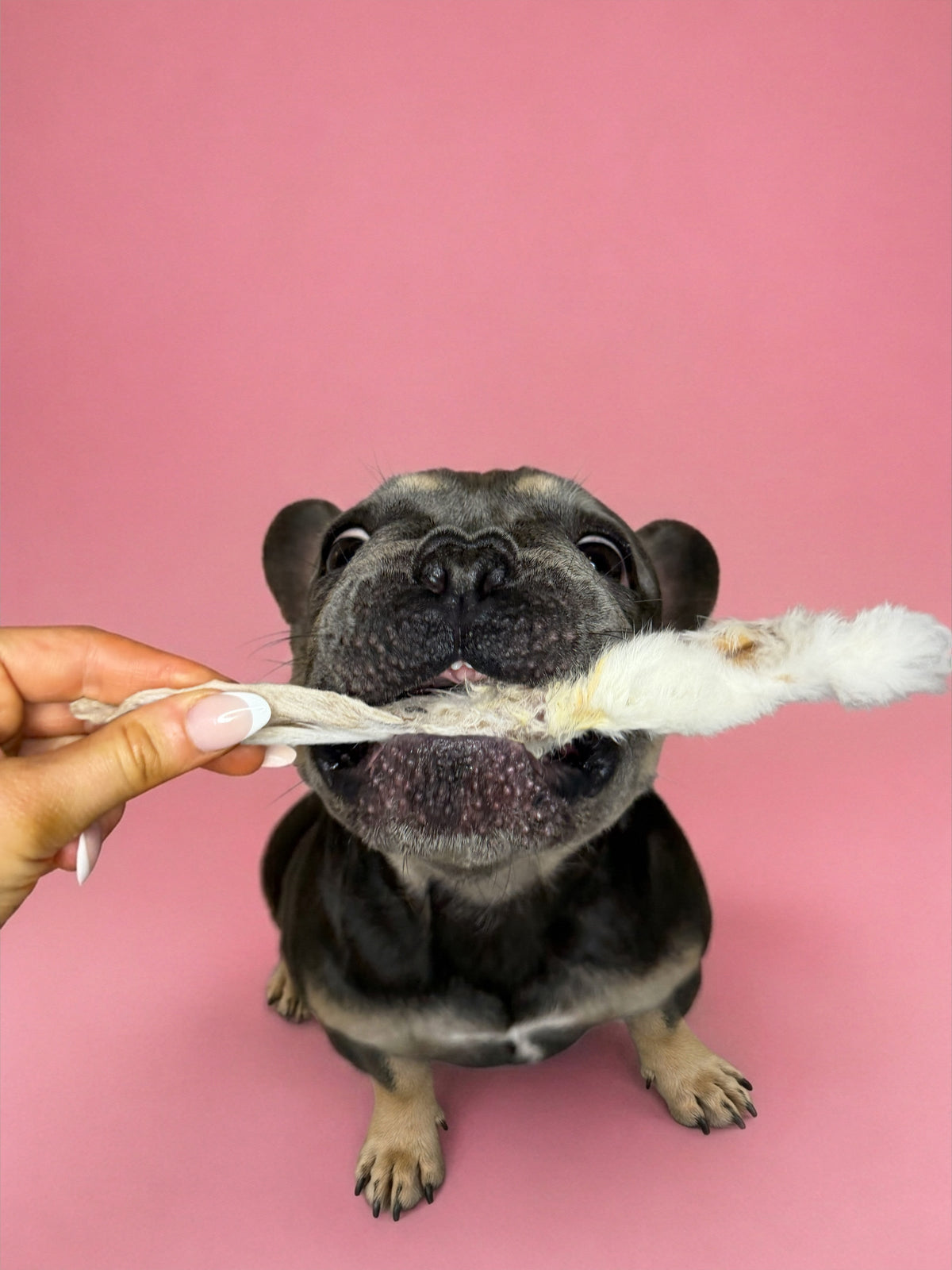
Rabbit ears are a familiar sight in the natural treat cupboard, whether your dog is enthusiastic about the furry version or prefers one without. They can provide an enjoyable chewing opportunity, provided the size, texture and portion suit your dog.
The quick answer
Rabbit ears can be an occasional complementary treat for suitable dogs. Their main appeal is a simple animal ingredient and an opportunity to chew. They are not a complete food, a dental treatment or a replacement for worm control.1, 2
What rabbit ears offer
A product made only from rabbit ear is straightforward to identify on an ingredient list. That makes it easier to record what your dog is eating. Check the actual composition because products and processing methods vary.
The shape and texture can also make a supervised treat session more interesting than a quickly swallowed reward. How long it lasts depends on the individual dog; no chew comes with a guaranteed number of minutes.
Furry or hairless
Furry ears retain hair and have a different texture. Some dogs enjoy that, while others prefer a hairless option. Fur does not establish that a product is more nutritious or safer.
You may hear that furry rabbit ears act as a natural wormer or sweep parasites from the gut. There is no reliable evidence for that claim. Continue the parasite-control plan advised by your vet.2
Feed with supervision
Choose an ear your dog can manage without immediately swallowing it whole. Watch the full chewing session and remove the remaining piece when it becomes a swallowing risk. If your dog gulps, repeatedly gags or struggles with the texture, choose a different kind of reward.
Count the chew with the day’s other extras. Ask the supplier for calorie information if it is missing, and follow storage instructions. Wash your hands after handling animal-based treats.1
Suitability is individual
Rabbit is not automatically hypoallergenic. Check with your vet before offering rabbit ears during an elimination diet or to a dog with food allergies, a fat-restricted diet, previous digestive obstruction or dental disease.3
Chewing does not replace tooth brushing and veterinary dental care. Avoid assuming that visible chewing proves a clinically useful plaque-reducing effect.4
Common questions
Can puppies have rabbit ears?
Suitability depends on their age, teeth, size and chewing behaviour. Ask your vet and check the product’s age guidance; supervision is still essential.
How often can I give one?
There is no universal daily number. Size, calories, tolerance and the rest of the diet matter. An ear can be too much for one dog’s allowance and appropriate occasionally for another.
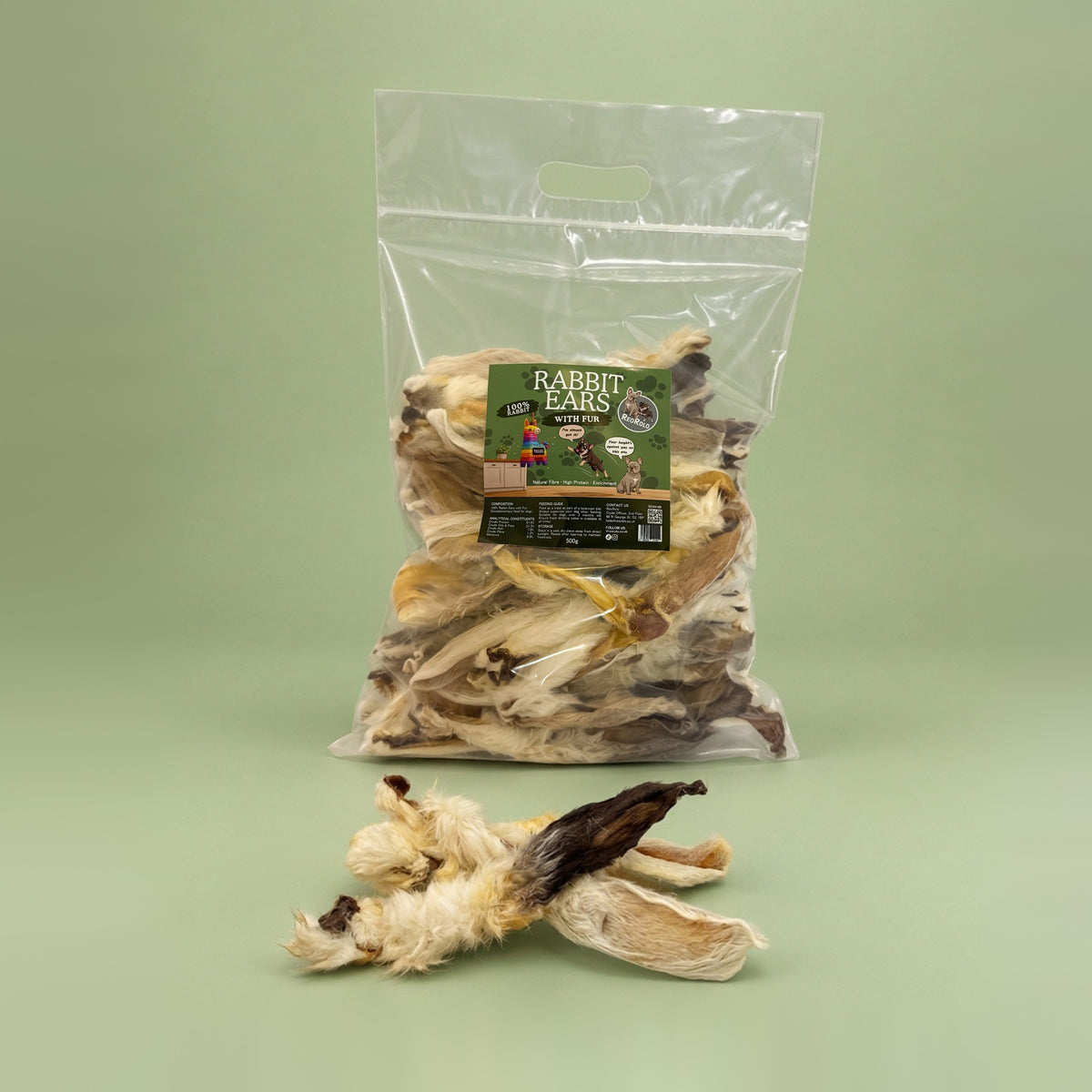
Rabbit Ears
Shop rabbit earsGeneral information for dog owners. Your vet can advise on your dog’s individual health and diet.
Sources and further reading
Sources checked 7 October 2026. Research findings relate to the studied preparations; listing a source does not mean it endorses ReoRolo products.
- WSAVA - Feeding treats to your dog
- Veterinary Voices UK - Rabbit ears are not natural dewormers
- PDSA - Food allergies in dogs
- VCA Animal Hospitals - Dental disease in dogs