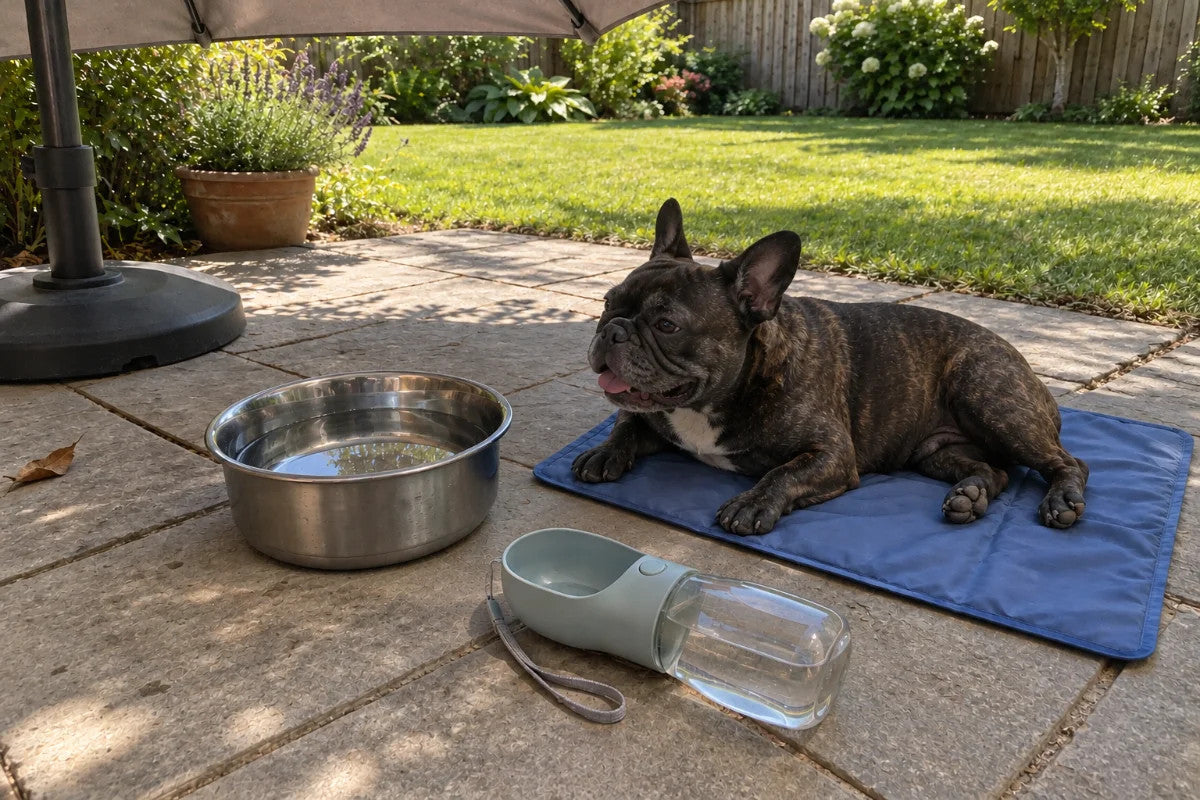
Recognise the signs
Heavy or persistent panting, drooling and unusually noisy breathing can be early warnings. A dog may seem restless, seek shade, develop red gums or vomit. Weakness, confusion, collapse or seizures indicate severe illness. Heatstroke can damage internal organs, so apparent improvement does not mean the danger has passed.1, 2
Heatstroke: every minute matters
Heatstroke can become life-threatening in a matter of minutes. When a dog cannot cool themselves effectively, their body temperature can rise rapidly, damaging vital organs including the brain, kidneys and heart. In severe cases, this can lead to multiple organ failure and death.
Do not wait for your dog to collapse. Start cooling immediately and contact an emergency vet. Even if they seem better after cooling, they still need veterinary assessment - serious complications may not be immediately obvious.
Start cooling while help is arranged
Move your dog out of the heat into shade or a cool room and begin cooling immediately. Gently pour cold tap water over their whole body, soaking the coat thoroughly while keeping water away from their head, nose and mouth. Use a fan, breeze or air conditioning to help cooling. Cold tap water is suitable; you do not need to add ice or delay cooling while searching for lukewarm water.2, 3
Wetting the body helps your dog cool down. Do not wrap or cover them with wet towels, as these can trap heat. A cold, wet towel underneath them can help, but should not replace wetting their body.2
If another person is with you, have them call the vet while you cool the dog. If you are alone, start cooling and call on speakerphone if possible. Explain the signs, the dog’s location and what you have already done.
Offer small amounts of drinking water only if your dog is alert and able to swallow. Never force water into the mouth. Keep the airway clear.2
Once initial cooling has started, arrange urgent transport with the vet. Use air conditioning or ventilation in the vehicle and have another person continue appropriate cooling if it can be done safely. Veterinary assessment is still needed even when your dog looks brighter.
Is cooling just their paws enough?
No. Wetting only the paws does not provide enough cooling for suspected heatstroke. Cool the body with water while keeping the head and airway clear.
Reduce the risk before a hot day
Avoid strenuous activity in warm conditions and choose cooler times for essential short outings. Provide shade, drinking water and a cool resting place. Never leave a dog in a parked car, and remember that warm rooms, conservatories and travel can also become dangerous.4, 2
Watch the individual dog rather than relying on one temperature threshold. Humidity, activity, body condition, age and health all influence risk. Flat-faced dogs such as French Bulldogs can have particular difficulty coping with heat.2
A missed walk won’t kill your dog. Heatstroke can.
If it’s too hot for a safe walk, skip it. Let your dog rest somewhere cool and offer gentle indoor enrichment instead. No walk is worth risking their life.
Make a simple plan now
Save your usual vet’s number and the out-of-hours contact in your phone. Know where you can access water on a journey and how you will get home if conditions change. Cancelling a walk is a sensible choice when your dog cannot stay comfortable.
Common questions
Can heatstroke happen without hot sunshine?
Yes. Exertion and poorly ventilated warm spaces can also contribute. Watch for the signs rather than assuming shade alone makes conditions safe.
Should I wait to cool until I reach the vet?
No. Start promptly while arranging urgent care. Early cooling and veterinary help work together.1
Health & Safety
Recognise concerning changes and know when your dog needs veterinary help.
Explore dog health guidesGeneral information for dog owners. Your vet can advise on your dog’s individual health and diet.
Sources and further reading
Sources checked 7 October 2026. Cooling guidance checked against PDSA and RSPCA on 9 October 2026. Research findings relate to the studied preparations; listing a source does not mean it endorses ReoRolo products.
- Royal Veterinary College - Heatstroke in dogs and cats prevention symptoms and first aid
- PDSA - Heatstroke in dogs
- RSPCA - Heatstroke in dogs
- Dogs Trust - Hot weather advice